
In short
- Offer common allergens early, around the time solids start, then keep them on the menu.
- Start with a small taste, one allergen at a time, early in the day.
- Call 911 for trouble breathing, lip or tongue swelling, repeated vomiting or unusual sleepiness.
Early can help
In the US, nine foods cause about 90% of food allergy reactions: milk (dairy), egg, peanut, tree nuts, wheat, soy, sesame, fish and shellfish.
Families used to be told to wait until age 2 or 3. Newer research found no benefit to delaying allergens. The LEAP study found that offering peanut foods early, starting between 4 and 11 months, and then regularly, greatly lowered the chance of peanut allergy in babies at high risk.
That's why US guidance, from the American Academy of Pediatrics (AAP) and the national peanut allergy guidelines, now says to introduce common allergens early, once your baby is ready for solids at about 6 months, rather than waiting.
How to start
- Start with a few low-allergy foods first, like infant cereal or pureed fruit.
- Then offer the common allergens one at a time: egg, peanut, dairy (like yogurt), wheat, soy, sesame, fish, shellfish and tree nuts.
- Start with a small taste. If there's no reaction, gradually offer more.
- Offer a new allergen early in the day, like at breakfast or lunch, so you can watch your baby for the rest of the day, and wait 3 to 5 days before the next one.
- Once a food is tolerated, keep it in the diet regularly.
- Always use a safe form: peanut and nut butters thinned, never chunks or whole nuts; egg fully cooked.
Keep them on the menu
Trying an allergen once isn't enough. Once your baby has had it without a reaction, the AAP advises keeping it in their diet routinely, in portions that suit their age: for example, about 2 teaspoons of thinned peanut butter or about a third of a well-cooked egg. In the LEAP study, it was early and continued, regular servings that protected babies.
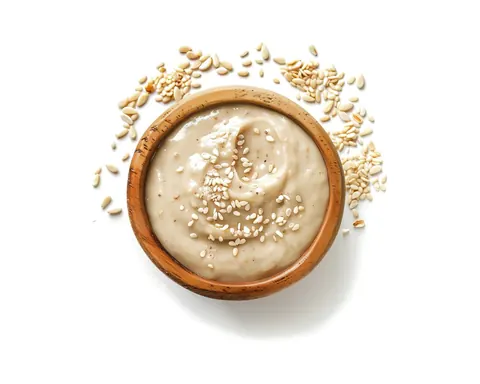
- Stir thinned peanut butter or tahini (sesame) into oatmeal or a fruit or vegetable puree.
- Offer well-cooked scrambled egg, mashed or as soft strips.
- Serve plain whole-milk yogurt or soft cheese. Dairy in foods is fine from about 6 months; cow's milk as a drink waits until 12 months.
Practical ways to prepare them
- Peanut: mix 1 teaspoon of smooth, unsalted peanut butter with 2 teaspoons of warm water, breast milk, formula or puree. Never give peanut butter straight off a spoon, and never whole peanuts.
- Egg: cook it well, as a fully set scramble or a hard-boiled egg, and mash it well.
- Tree nuts: stir finely ground nut flour (like almond flour) or a thinned smooth nut butter into warm oatmeal or fruit puree.
Talk to your pediatrician first if
- Your baby has severe, persistent eczema
- Your baby has had an allergic reaction to a food, such as egg
- Food allergies run in your family (you can also talk to an allergist)
Watch for reactions
Food allergies can be severe and life-threatening. After a new food, watch for signs like a rash, vomiting or diarrhea. If you see them, stop the food and call your pediatrician.
Call 911 for trouble breathing, swelling of the lips or tongue, hives all over, repeated vomiting, or unusual sleepiness. If your baby has been prescribed epinephrine, give it right away.
Most egg allergies are caused by proteins in the egg white, but the yolk can cause reactions too.
Foods in this article
 Egg
 Peanut butter
 Tahini
 Yogurt
How to serve each one at every age is in the app's food guide.
Sources
- When to Introduce Egg, Peanut Butter & Other Common Food Allergens · AAP (HealthyChildren.org)
- Anaphylaxis in Infants & Children · AAP (HealthyChildren.org)
- When, What, and How to Introduce Solid Foods · CDC
- Egg Allergy · ACAAI
- Choking Hazards · CDC
- Guidelines for Clinicians and Patients for Diagnosis and Management of Food Allergy in the United States · National Institute of Allergy and Infectious Diseases (NIH)
- Cow's Milk and Milk Alternatives · CDC
All articles, recipes, guides, tips and chat answers in Mama & Baby Bites are for general information and education only. They are not medical, pediatric or nutritional advice, and they don't replace care from a qualified professional. In an emergency, call 911.