In short
- Spoon skills grow in phases, so don't expect neat scooping early.
- Start with pre-loaded spoons, then try two spoons, then independent scooping.
- Messy hands-on play builds comfort with new textures.
How spoon skills develop
Using a spoon takes planning, a steady shoulder, wrist turning and depth perception. Expecting an 8-month-old to scoop and bring food to their mouth without spilling is asking too much. Spoon skills grow in phases.
Three phases
- Phase 1 (6 to 8 months), pre-loaded spoons: load puree or mash onto a textured dipping spoon and hand it to your baby to bring to their own mouth.
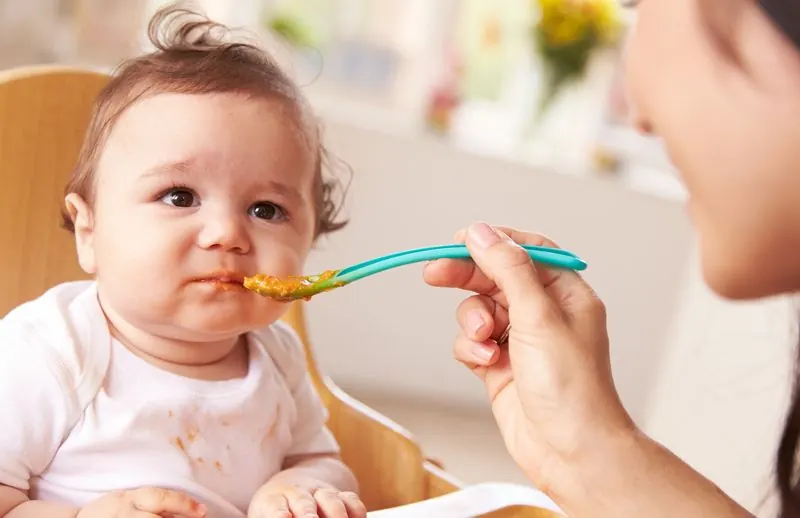
- Phase 2 (9 to 11 months), the two-spoon strategy: your baby holds one spoon to explore while you use a second spoon to feed or show scooping.
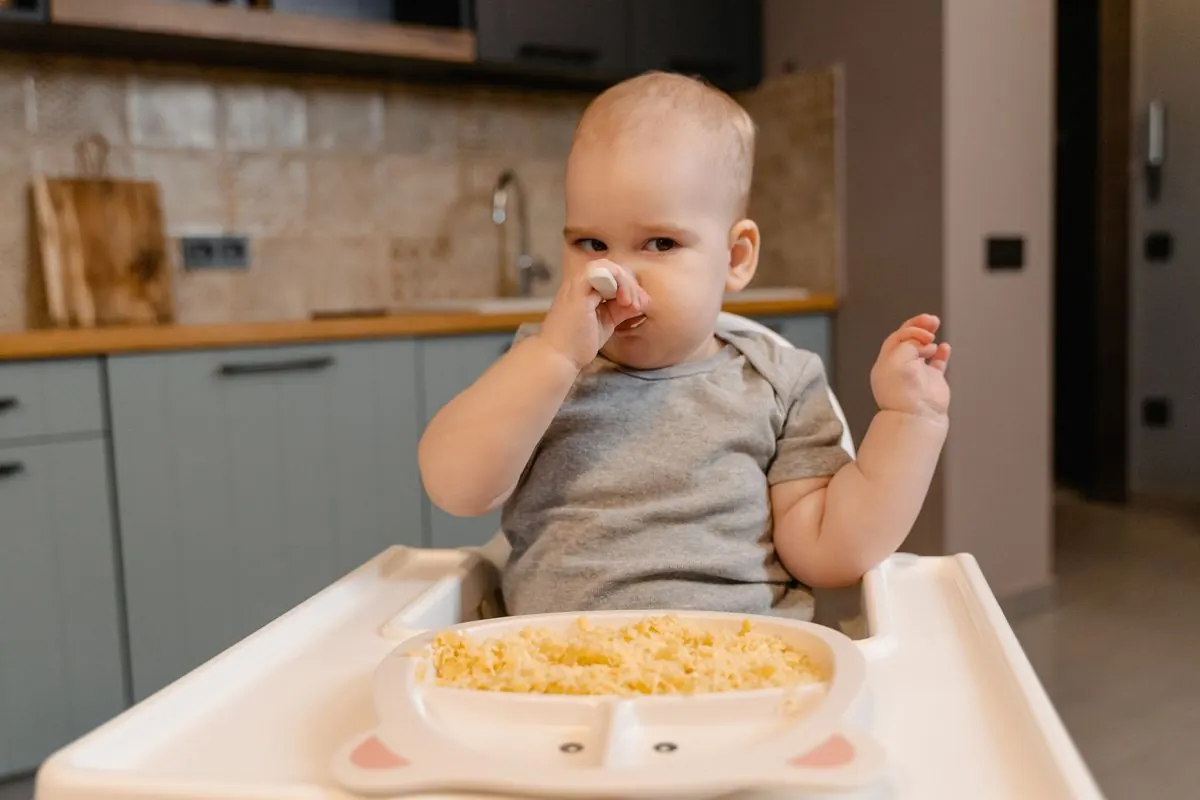
- Phase 3 (12 months and up), independent scooping: your baby dips into the bowl and turns their wrist toward their mouth.
The value of sensory play
Letting your baby touch, squish and smear food builds confidence and comfort with food. Exploring with their hands helps your baby learn where their mouth is, and getting used to textures on their skin makes new textures in the mouth less surprising.
Every child is different
Every child's relationship with food develops in its own way. These are supportive ideas, not clinical solutions. If your child strongly refuses food, is losing weight or has trouble swallowing, talk to your pediatrician or a pediatric feeding specialist.
Sources
- Fingers, Spoons, Forks, and Cups · CDC
- Tastes and Textures · CDC
All articles, recipes, guides, tips and chat answers in Mama & Baby Bites are for general information and education only. They are not medical, pediatric or nutritional advice, and they don't replace care from a qualified professional. In an emergency, call 911.