In short
- Refusal is normal; it often means a food is unfamiliar, not disliked.
- It can take 8 to 10 tries, so offer again calmly, next to a food your baby likes.
- You decide what, when and where; your baby decides whether and how much.
Refusal is normal
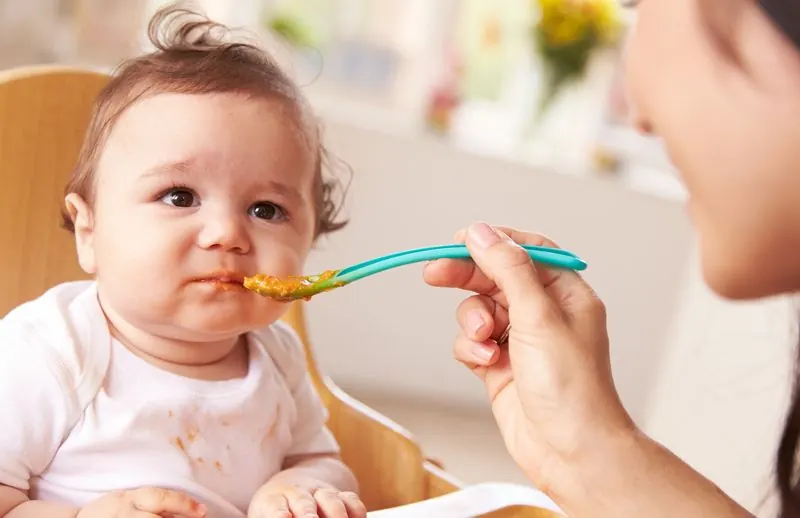
When your baby turns their head, pushes the plate away or keeps their mouth shut, it’s easy to feel worried or frustrated. Food refusal is usually a healthy sign of independence and of your baby listening to their appetite. Refusing a food often means it’s unfamiliar, not that they dislike it.
It takes time
Your baby may not like a food the first time. It can take 8 to 10 tries before a young child accepts a new food.
Try this
- Wait about a week, then offer the food again.
- Mix the new food with one your baby already likes.
- Eat the food yourself first; babies learn by watching.
- Give a simple choice between two foods.
- Freeze small portions so repeat tries don't waste food.
- Always put one familiar food your baby likes next to a new or previously refused food.
- Keep your tone calm and even: skip big cheers for a bite and disappointment when they don’t, so food doesn’t become about approval.
Phases are normal
Toddlers may suddenly refuse foods they used to love, or not want foods to touch. These phases often pass by about age 5. Talk to your pediatrician if you're worried about growth.
Who decides what
A widely used approach (from the Ellyn Satter Institute) splits mealtime jobs:
- You decide what food is served, when and where.
- Your baby decides whether to eat and how much.
Every child is different
Every child's relationship with food develops in its own way. These are supportive ideas, not clinical solutions. If your child strongly refuses food, is losing weight or has trouble swallowing, talk to your pediatrician or a pediatric feeding specialist.
Sources
- Picky Eaters and What to Do · CDC
- Signs Your Child Is Hungry or Full · CDC
- Tastes and Textures · CDC
All articles, recipes, guides, tips and chat answers in Mama & Baby Bites are for general information and education only. They are not medical, pediatric or nutritional advice, and they don't replace care from a qualified professional. In an emergency, call 911.